Showing posts with label canon eos 5d mark iii. Show all posts

16 May, 2012

Filmmaking tips from a legend – Interview with Francis Ford Coppola

Filmmaking tips from a legend – Interview with Francis Ford Coppola
Tuesday, 15 May, 2012 17:18 on EOShd.com
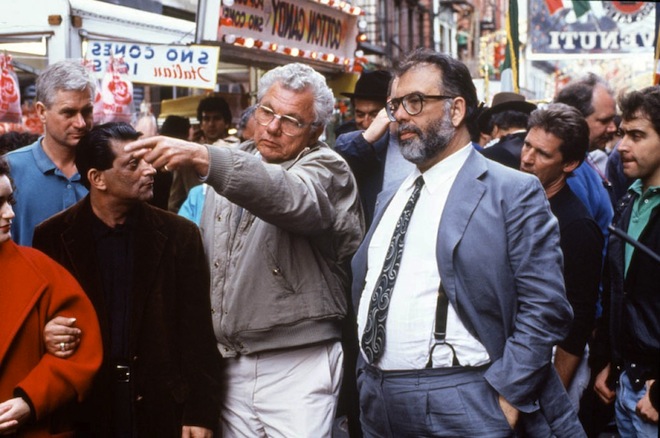
Coppola Godfather BTS
THREE RULES
1) Write and direct original screenplays
2) Make them with the most modern technology available
3) Self-finance them
EOSHD takes a look at Francis Ford Coppola’s approach to filmmaking with the help of the 99%
Francis Ford Coppola (Apocalypse Now, The Godfather) recently did a very candid interview with the 99% a blog by Behance (not related to the anti-capitialst movement)…Rather than just re-print it all I going to give you what I think are the most crucial bits of advice and my thoughts on it…
Filmmaking can never be mastered
“I just finished a film a few days ago, and I came home and said I learned so much today. So if I can come home from working on a little film after doing it for 45 years and say that – that shows something about the cinema”
A director is constantly coming up against new techniques and technologies. Coppola has a 3D section in his latest movie which is inspired by a drunken dream. To stay on top of the new stuff is vital. The world is a dynamically shifting place. Before you master something it will change. Coppola says he refused to teach a Master Class because he believes he’s still a student. I believe the best way to learn filmmaking is to just do it.
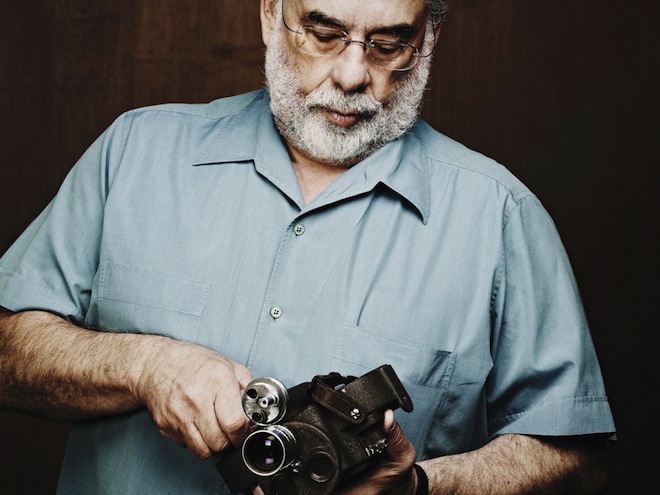
Francis Ford Coppola
Risks are essential
“Even in the early days of the movies, they didn’t know how to make movies. They had an image and it moved and the audience loved it. You saw a train coming into the station, and just to see motion was beautiful. The cinema language happened by experimentation – by people not knowing what to do. But unfortunately, after 15-20 years, it became a commercial industry. People made money in the cinema, and then they began to say to the pioneers, “Don’t experiment. We want to make money. We don’t want to take chances.” An essential element of any art is risk. If you don’t take a risk then how are you going to make something really beautiful, that hasn’t been seen before? I always like to say that cinema without risk is like having no sex and expecting to have a baby. You have to take a risk.
“I was never afraid of risks. I always had a good philosophy about risks. The only risk is to waste your life, so that when you die, you say, Oh, I wish I had done this.”
I’ve written about why creativity is such a risk before at EOSHD, you can read that article here. Commercial filmmaking is safe as it needs to turn a profit. The most artistic filmmaking comes from the people who take a gamble. It is a gamble not just on the gear but mainly on people – actors, writers, composers, producers, marketing teams – and on ideas. That gamble costs money. Usually your money! At the end of your career is it best to have a load of zeros on the end of your bank balance or to have lived and to have made great films?
Don’t rely on memory, put your ideas on paper
“One of the most important tools that a filmmaker has are his/her notes. [Date them, put the location on]“
One way to do this is to turn your notes into a blog. Many people are afraid of exposing ‘their work in progress’, preferring only to show stuff when it is ready. Be candid – the work in progress says as much as the final film.
If you don’t begin by imitating, you won’t begin at all
“Don’t worry about whether it’s appropriate to borrow or to take or do something like someone you admire – because that’s only the first step and you have to take the first step.”
Ideas are never formed in a vacuum. They are the product of what goes on between minds, between communities, between countries. It helps to borrow (stealing is too strong a word – you’re not depriving the original artist of their work) then develop the idea in your own way. Over time you can create something genuinely new and original from it. All the great artists have done and where this is clearest is in music. The Beatles stole from 50′s R&B and that turned out pretty well. Oasis stole from The Beatles and helped form the Brit Pop scene in the 90′s which was genuinely new.
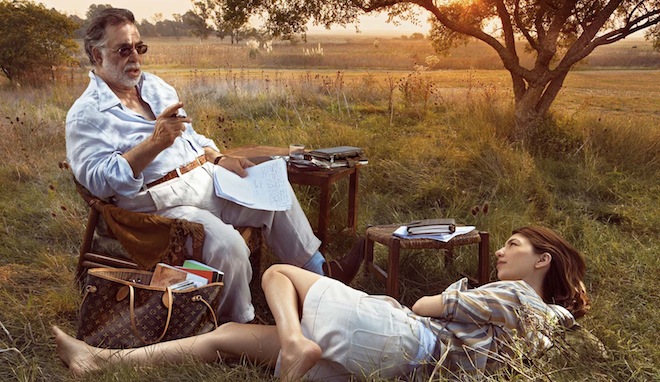
Above: Francis Ford Coppola and Sofia Coppola. With advice this good no wonder Sofia Coppola is a great filmmaker in her own right. This is a glossy ad for a fashion giant, and it pays the bills for his self funded titles.
Don’t rely on selling your art directly
“Try to disconnect the idea of cinema with the idea of making a living and money. Because there are ways around it. You work another job and get up at five in the morning and write your script. Maybe the students are right. They should be able to download music and movies. I’m going to be shot for saying this. But who said art has to cost money? And therefore, who says artists have to make money?”
The idea of people paying to watch films is outdated. In 5 years people will not pay to watch your film, they will not pay to listen to your music. Instead the new distribution model is crowd funding – where you give someone a sense of ownership of the film along with merchandise and a credit as a producer, or working a day job. This could be anything from an office job, to writing for a magazine, or blogging, or teaching workshops on filmmaking, or being paid to produce content and films for businesses.
Where I disagree with a lot of people here however is about the purity of an artist’s hand. Don’t use your hand to promote a product. Use your reputation or personal endorsements but not your hand. If Coppola had shot and directed a glossy ad like the one above, it would devalue his hand as an artist. His hand should be used for art, not selling.
Listen but filter intently
“A screenplay has to be like a haiku [Japanese poetic form]. It has to be very concise and very clear, minimal. [But when you come to shoot it] you’re going to listen to the actors because they have great ideas. You’re going to listen to the cinematographer because he will have a great idea. You must never be the kind of director, I think maybe I was when I was 18, “No, no, no, I know best.” That’s not good. You can make the decision that you feel is best, but listen to everyone, because cinema is collaboration. I always like to say that collaboration is the sex of art because you take from everyone you’re working with.”
I agree here only to a certain extent. Listening is one thing but the really important thing is filtering and judgement. A filmmaker must absorb the world around him but if your internal filtering lacks taste, you will create shit. You will act on the wrong ideas. You will involve the wrong people. You will choose the wrong gear. You will send out the wrong message as a filmmaker. I believe the ability to filter crap is the filmmaker’s biggest intuitive asset and very little of that is learned later on. The rest of it comes from within, from your upbringing and the culture of where you grew up and what you absorbed.
Even as a cinematographer in a specialised role, creating a composition and framing the shot – you are constantly relying on your filter to pair down the shot to something beautiful. The art of photography is reductive not additive. To throw out the stuff that looks bad and only include the stuff that looks good, you first have to know what is good and what isn’t. That is a real talent.
Even writing a blog like EOSHD is a challenge for filtering. If I drew attention to the wrong stuff, it wouldn’t be interesting, but what is interesting is in the eye of the beholder. So as an artist, it helps to have sympathy with your audience.
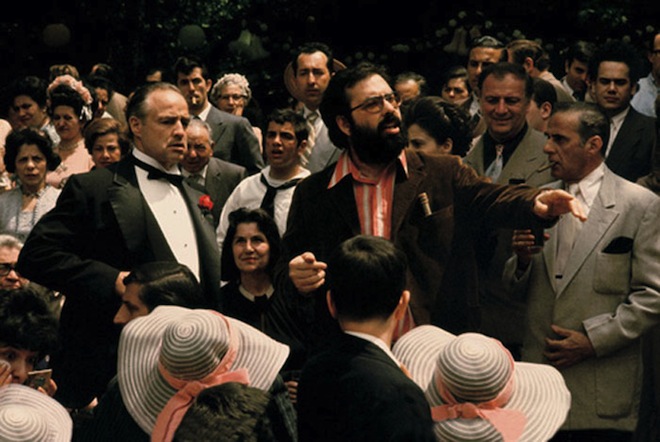
Marlon Brando and Coppola - The Godfather
When making a movie focus on a theme
“When you make a movie, always try to discover what the theme of the movie is in one or two words. Every time I made a film, I always knew what I thought the theme was, the core, in one word. In The Godfather, it was succession. In Apocalypse, it was morality. The reason it’s important to have this is because most of the time what a director really does is make decisions. All day long: Do you want it to be long hair or short hair? Do you want a dress or pants? Do you want a beard or no beard? There are many times when you don’t know the answer. Knowing what the theme is always helps you.
“I remember in The Conversation, they brought all these coats to me, and they said: Do you want him to look like a detective? Do you want him to look like a blah blah blah. I didn’t know! And [because the theme was privacy] I chose the plastic coat you could see through. So knowing the theme helps you make a decision when you’re not sure which way to go.”
A tight focus – this is what makes a film more effective, more moving, more beautiful. If you don’t have anything driving that focus, you’re not directing. You’re guessing. The cinematography I’m most proud of on EOSHD came from when I had a tight focus on a theme. With Modernisation it was a poor / rich divide and the old world being overtaken by a powerful new one. With For a Minute I Lost Myself it was the terror and disorientation of out of control capitalism in a crazy metropolis. For Longshan’s People II it was the people and tradition versus 1000 missiles pointed at Taiwan by China. In each of these cases each idea was gifted to me by the location, I didn’t invent anything. These were all emotional factors driving the compositions. If the place you live in does’t give you any new inspiration, the answer is to travel. If the people you have around you don’t give you any inspiration, the answer is to meet new people. The life you live is essential for giving you the ideas to base films on.
Cast with improvisation sessions
“With improvisations, they really stick if there’s something sensual connected with them, like food or eating or making something with their hands.”
I think improvising is better than sticking rigidly to a script when casting an actor, because the actor is forced to give more of their personality. Rather than forcing them to get their head into a character, see what they are like as a person and what they bring to the film as a character in their own right, see if they are a fit to the script. I believe the best actors should be like close friends on the same page as you, and firing ideas back and forth. It takes a long time to find a creative team, including actors, writers and other collaborators in filmmaking but it is worth persevering.
Don’t force anything.
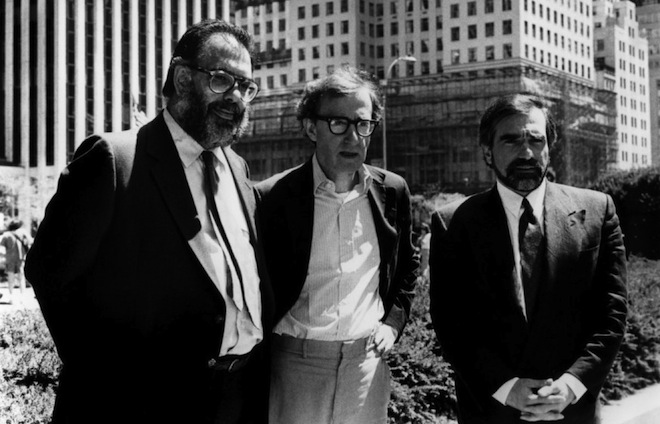
Coppola with Woody Allen and Martin Scorsese in New York
Above: Coppola with Woody Allen and Martin Scorsese in New York
Have conviction in your vision and ‘bake the scene in the oven’
“When I was young on a movie set, I would try to stage the scene and the actors would read it, and I said – Well, you stand here and you sit there…[But] They would say – Well, I don’t think I should sit there, I should stand there. And I don’t think this line is right….And they would begin to challenge the text. What I learned, which is a simple idea, is that if you hold out with your vision a little bit, it’s like a cake being put in the oven. The scene doesn’t work immediately, you have to bake it a little bit. It’s unfair, when you begin to create a shot, say, or a scene, that it’s going to immediately be like those beautiful scenes in the movies. It needs a little bit of time to mature.”
Kubrick was famous for take after take, after take. This is a bonafide working technique that delivers. A scene morphs and shifts as it bakes in the oven. The trick is to know when to take it out.
Don’t lie to yourself
“You never have to lie. If you lie, you will only trip yourself up. You will always get caught in a lie. It is very important for an artist not to lie, and most important is not to lie to yourself. There is something we know that’s connected with beauty and truth. There is something ancient. We know that art is about beauty, and therefore it has to be about truth.”
I think the worst scripts are those where someone acts as they wouldn’t do in real life. It takes me right out of the film. Avoid bullshitting your audience and don’t insult their intelligence with the obvious. Pair down the shots to those that move the story forward. Nobody wants to see a character walking around from room to room in a lame attempt to introduce some tension, pacing or build up. The hand of the artist, when writing and directing, is all about touching what provides atmosphere, drama, emotion and intrigue and what is just surplus to requirements.
Have confidence
“The artist always battles [their own] feeling of inadequacy. Self confidence is the biggest barrier to becoming a filmmaker. We are very insecure. People are insecure, not just young people. Everyone is insecure.
“They say that Barbara Streisand, when she goes on, she has a panic attack. She feels she can’t sing. Of course, she can sing. I believe that when you write something, when I write something, I turn it over and I don’t look at it. Because I believe the writer, the young writer, has a hormone that makes them hate what they’ve written. And yet, the next morning, when you look at it, you say, “Oh that’s not bad.” But the first second you hate it. ”
Even the greatest artists have doubts. Can I do it? Filmmaking is such a mammoth effort that you have to be crazy to devote so much time to something you think you might not be any good at. But it is far easier (and less risky) to fail due to lack of faith than it is to fail trying.


Source: EOShd

23 April, 2012

5D Mark III Zeroed AA Filter – First footage for download

Sneak preview5D Mark III Zeroed AA FilterFirst footage for download
Sunday, 22 April, 2012 12:54

Here is a sneak preview of whats to come. Please be sure to download the 50Mbit constant bitrate clip rather than judging it from the highly compressed Vimeo stream.
This clip is shot with my modded 5D Mark III without the anti-aliasing filter softening the image. The clip was shot on the softest setting with no in-camera sharpening. Removing the AA filter also makes the camera sensitive to infrared light and gives you a bit of extra detail in the shadows, but you will need an IR-cut filter on your lens for electric lighting and black fabrics. Canon recently produced a 60Da for astro-photography and with this mod the Mk III becomes a 5Da!
There’s no serious issues with moire and aliasing after removing the filter.
As for the resolution increase – it is there!
Neither James Miller or myself has yet had time to test this against a normal 5D Mark III but I do intend to do this soon.
I’m also putting together a step by step guide book on how to do this mod yourself (the safest way). Opening / rebuilding the camera takes about 30 minutes each way (if you follow my instructions).
More to follow in a few days.


Source: EOSHD.com
Have A Blog?... Eran Money With URL Shortner..
www.adfoc.us/

17 April, 2012

Which digital cinema camera to get now?, Which digital cinema camera to Buy now?

Which digital cinema camera to get now?
Friday, 23 March, 2012 15:14
Check Our France Blogspot Link
WWW.GETbyU.blogspot.fr

Digital Cinema Cameras - Guide
Disclaimer: I usually say don’t wait – shoot with what you can get now, the best you can afford. But March 2012 is an unusual month because NAB 2012 is around the corner in April. The picture may change somewhat. Bear that in mind!
The candidates are:
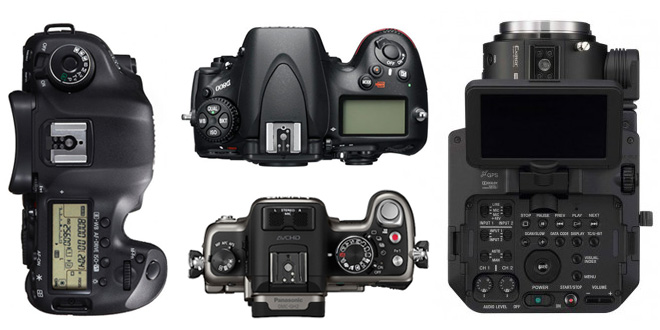
Sony NEX FS100$4000 used / $4700 new
The first professional interchangeable lens camera to dip to the accessible $4000 mark
Canon 5D Mark III$3000 used / $3500 new
An incremental improvement to the 5D Mark II
Canon 5D Mark II$1600 used / $2000 new
For budget users for whom a 5D Mark III is out of reach
Panasonic GH2$600 used / $800 new
For the price of a lens you can shoot at 170Mbit i-frame with FS100 standard 1080p
Nikon D800$3000 new
Improved Nikon full frame video DSLR offering with 4:2:2 HDMI output and 1.6x crop mode
Sony NEX 7$1500 new
Top of the range mirrorless camera with 1080/60p
And at the end, a brief look at some of the higher priced options such as the RED Scarlet, Canon C300 and Nikon D4.
Wow what an embarrassment of riches for a start! I remember just 5 years ago the cost of going from a not-very-cinematic small chip camcorder to a slightly less not-very-cinematic pro camcorder was more than the price of the 5D Mark II alone.
Now you can go from the not-very-cinematic to cinematic for the price of a living room TV, with cameras like the GH2.
We’ve never had it so good.
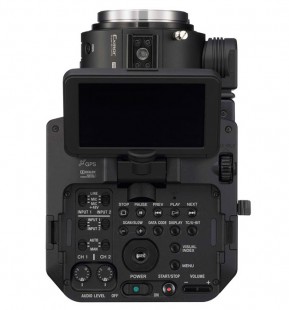
The case for the Sony FS100
FS100
This is now down to $4000 used and so is a lot of camera for the money. If you are considering the 5D Mark III but think the resolution, manual focus, monitoring and handling may be an issue then the FS100 may be worth extra the $500 or so. It has the same lens mount as the little consumer NEX cameras and can take Canon lenses with full aperture and IS control via the new Metabones adapter, the issues with which are now solved. Unlike, say, a $10,000 Scarlet, the FS100 is ready to shoot out of the box. It is modular though so you will be tempted to buy specific add-ons for it… But they’re not essential like they are for the RED. It takes an SSD or SD, and the high capacity battery runs for up to 8 hours. It does 1080/60p even via uncompressed HDMI 4:2:2. Currently the Atomos Ninja does not support that, only 1080i with 24p in progressive segmented frame format, but it will be nice for the future. If you need slow mo, better resolution and peaking with an articulated screen the FS100 is a better choice than a full frame DSLR for not that much more money. A forthcoming firmware update will make this camera multi-region like a Canon DSLR is. For some reason the price is a bit crazy in Europe so consider importing a NTSC model instead.
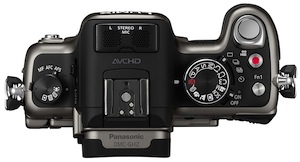
The case for the Panasonic GH2
GH2
If you think the FS100 is a lot of camera for the money wait until you see what this does for $600. Resolution is insane and the best of all the DSLR-type video modes. With the hack which runs very reliably you get up to 170Mbit ALL-I from it and a very fine grain of noise. Image quality is comparable to the FS100 in all but the shadows. The codec compresses the lows more and it has a more punchy baked in look. The camera doesn’t have the low light performance above ISO 3200 that the 5D Mark III and FS100 does but you can get very nice film-like black and white images from it at ISOs up to 12,800 in extreme low light situations with fast glass. Nice artistically. The camera lacks the audio control and XLR jacks of the FS100, and the sensor is slightly smaller than Super 35mm. It does not have quite the colour sampling performance of the 5D Mark III, Mark II and Nikon D800 via HDMI 4:2:2 because the image processing pipeline prioritises resolution sampling but there’s no question that this is easily the best bang for buck camera in the world right now and capable of a superb image, sometimes RED 2K rivalling in the way it looks with the right lenses. Just be aware that shallow DOF is rather small-chip looking at super wide angle, though it is lovely and shallow at mid to tele even stopped down.
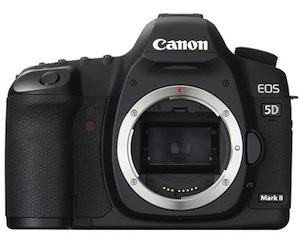
The case for the Canon 5D Mark II
5D Mark II
An oldie but goodie, the Mark II has the largest sensor here because it is primarily a 35mm photographic animal. The problem is that the 4 year old image processor and sensor is not optimised to deliver video. Resolution falls quite a long way short of the GH2 and FS100. The codec is ok but nothing special, and you don’t get the fine grain of noise you do on the FS100 and GH2 either. The image is really nasty at ISO 3200 and above with blotchy red and blue speckles everywhere. However there is no denying that full frame x-factor. The colours, the way it handles shadows and highlights (it even has more headroom in specular highlights than the much newer 5D Mark III in video mode) and the creamy shallow depth of field even when stopped down. With this camera it is all about the lenses. Forget about the rest. Although with the superb Magic Lantern hack you can win a LOT of useful video related features back (such as manual audio control, levels, peaking and adjustable frame rates) most of which the 5D Mark III doesn’t have and might never have! Moire and aliasing is an issue to watch out for as is HDMI monitoring at 540p and via the small non-articulated LCD which can be back breaking at times – but with the used price now finally dropping since being made obsolete the old 5D could be a bargain if you want the full frame look in your videos. A great b-cam to the better all-rounder GH2 for those on a budget.
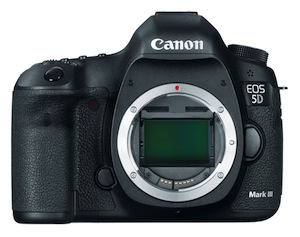
The case for the new Canon 5D Mark III
5D Mark II
Rather than progression, this camera is more like a fix. It does away with moire and aliasing, it has a headphone jack for audio, and better monitoring over HDMI. It reminds me in some ways of the difference between, say, a 60D and 7D. BUT it still has the muddy resolution of the 5D Mark II from 4 years ago! For certain shots the softness is just perfect. Portraits, medium-close ups, shallow DOF stuff is all very nice on this camera. At infinity focus on a wide angle shot though, it looks utterly terrible. The codec is questionable on this one, it doesn’t seem to give you much of an image quality boost and it has some fizz where the old 5D Mark II has none, but it is nice to have intra-frame to give quick motion a cleaner more cinematic look. Whether the 5D Mark III is worthy of your $3000 or whether you should spend half that on the body and invest the rest in lenses will depend on you. If you already have a lot of full frame glass and want to make use of your nice fast wide angle 24s and 28s then this is the one to go for provided you can put up with the stuff missing over the FS100, like 1080/60p, over crank, clean HDMI, 4:2:2, XLR audio, articulated screen, peaking for manual focus, better battery, (deep breath, 1 sec!!……….) mirrorless mount, AF with Sony lenses and recording to an SSD. Quite a lot more for $500 extra! But bear in mind that full frame is still quite a bit larger than Super 35mm in terms of the sensor so you get a different look to your lenses on the FS100.
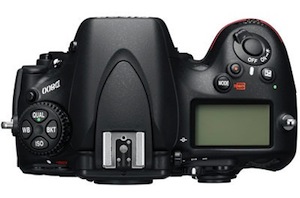
D800
Resolution actually seems a notch above the 5D Mark III judging from some footage I’ve seen lately. But the camera has issues on horizontal lines, some aliasing and quite heavy moire like the old 5D Mark II. This is not improved via the HDMI output but you do get 4:2:2 and can record to ProRes at 300Mbit. Just as well since the internal encoder is not very good. However the DXOMark results for the 36MP sensor are VERY – no EXTRAORDINARILY good. They say it is the best they’ve ever tested, better than medium format digital backs. Surprisingly the ISO score is neck and neck with the D4 despite the much higher megapixel count. How this translates to video mode remains to be seen. This camera is also a slightly more reasonably priced camera than the new Canon equivalent but more than a used 5D Mark II. It has some things the 5D Mark III doesn’t such as a 1.6x crop mode but it lacks some of the Canon features like timecode and internal i-frame codec. Image quality is similar on the whole and you get the same kind of manual audio control and monitoring. If you have a EVF just be aware that you’ll be relying on a 24Mbit internal codec that isn’t much good. You might want to swap it to a Ninja for both monitoring and recording with this camera.
Earn Money: ? Click Here

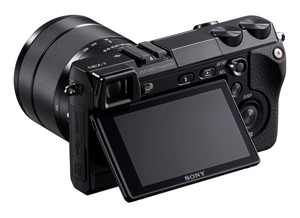
NEX 7
Some of the FS100′s best features have tricked down to the NEX 7 but the image quality just isn’t as good. The GH2 is better resolved as well. What the camera does have going for it is price, size, lens mount, slow mo (although it is not compressed as well as on the FS100) and peaking for manual focus. It also has a nifty articulated screen making it more convenient to use out of the box than a 5D Mark III or D800 for video on a tripod. Moire and aliasing is there and there’s no way to record at high bitrates like there is on the other cameras. The camera has a flat picture profile but it falls apart horribly in post so this is not the one to get if you want to do colour correction or shoot flat. Personally I end up using my GH2 ahead of the NEX 7 because I prefer the image, though both are brilliant in terms of what they offer for the money. ReWo have developed a very nice cage for the NEX 7 like they did for the GH2, you can check that out here.
The case for the others
Scarlet
RED, C300, Nikon D4 – now it gets serious. These are a lot of money and shouldn’t be considered unless what they’re offering for the extra is worth it in terms of investment. These are not purely artist’s tools they are business tools. Here is an example of what I mean – the FS100 lacks a built in ND filter. Would this slow you down or hurt productivity shooting a commercial job? If the answer is yes then it is worth investing a not inconsiderable amount of money in solving the problem.
The Canon C300 solves a lot of problems and is simply brilliant to use. However the image is not that much different to the FS100 (8bit 4:2:2) and it lacks some features of that camera – such as over crank, 1080/60p, SSD recording and auto-focus. It does however have two biggies… Built in ND wheel and HD-SDI. If those are a concern – and you will know without explanation if they are – then that will be $11,000 for your ND wheel and HD-SDI socket thank you very much, ta. Oh and it also has a ‘broadcast ready’ codec which is helpful if you are shooting for the dinosaurs at the BBC! It is MPEG 50Mbit 4:2:2 and 8bit – not up to the Sony F3 standard of 10bit – but this is more than compensated for by the sensor which has the best colour sampling on any camera today.
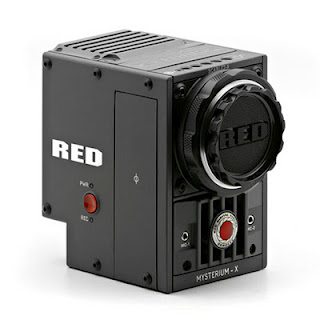
The RED Scarlet is $10,000 and does 4K. If that isn’t exciting I don’t know what is! However it comes with a plethora of issues which need carefully considering. Remember also that 2K on this camera is in crop mode. 4K is full sensor and that mode doesn’t do slow-mo like the EPIC.
It won’t shoot for $10,000. You are really looking at closer to the C300′s price. Here is the breakdown of Scarlet’s pricing:
Scarlet-X brain with Canon mount and SSD slot – $10,000

Side handle (mandatory) – $1000
LCD (mandatory) – $1600
Battery (erm, mandatory) – $400
REDMAG (that is the SSD, 64GB) with station $1100
Then there’s the stuff you really need but can just about get away with not having. The RED ROCKET speeds up post – that is $5000. The extra SSDs are $1000 a piece for just 64GB, far more than they would be direct from a manufacturer like Kingston whose drives are the latest tech and go for just $1 per GB. Yes – $64! So add up the mandatory stuff first and that comes to $14,100. Still under the Canon C300 but with raw workflow and 4K. For absolute image quality that is really very good value. You have to really want that 1080p broadcast ready codec and quicker workflow to stump up extra for the Canon C300.
And finally the Nikon D4.
Forget it. The D800 has a better image in video mode and that is half the price! It does however have a 2.7x 1:1 crop mode that gives you a sensor size the same as a $300 Nikon J1 mirrorless compact camera. Don’t laugh – image quality is actually perfect 1080p in that mode with no aliasing or moire. But is it worth $6000? As a stills camera for pros that do the occasional video, yes. But for filmmakers, certainly not.


Source: EOSHD.com
Earn Money: ? Click Here
http://adfoc.us/

Ayeza Khan Photoshoot 2020, Ayeza Khan Photos, Ayeza Khan 2020 New

Ayeza Khan Hot Photoshoot Ayeza Khan Hot Photoshoot, Ayeza Khan, Ayeza Khan Photos