Showing posts with label BBC News. Show all posts

07 May, 2012

Advance press screenings of 48fps The Hobbit ‘disappoint’

Advance press screenings of 48fps The Hobbit ‘disappoint’
Wednesday, 25 April, 2012 on EOShd
Peter Jackson dir. The Hobbit with RED EPIC

The future is here but it seems nobody checked to see if it looked any good.

Shot with a 3D Red EPIC rig at 48fps, Peter Jackson’s return to the world of JRR Tolkien has been ‘stripped of the magic of cinema’ according to many who saw the advance press screenings by Warner Brothers.

This from Devin Faraci at CinemaCon [reading the full article here is highly recommended]:

“The 48fps footage I saw looked terrible. It looked completely non-cinematic. The sets looked like sets. I’ve been on sets of movies on the scale of The Hobbit, and sets don’t even look like sets when you’re on them live… but these looked like sets. The other comparison I kept coming to, as I was watching the footage, was that it all looked like behind the scenes video. The magical illusion of cinema is stripped away completely.

[The Hobbit] looked like a hi-def version of the 1970s I, Claudius. It is drenched in a TV-like – specifically 70s era BBC – video look. People on Twitter have asked if it has that soap opera look you get from badly calibrated TVs at Best Buy, and the answer is an emphatic YES.”

Oh dear!

The view is common – here is another who says it reminded him of 70′s episodes of the BBC’s Dr Who.

This guy had good things to say about the sweeping helicopter shots and landscapes (real landscapes) but it seems that 4K 3D at 48fps is so revealing and clinical that it reveals ‘the gaffer tape holding the set together’ and the makeup on the actors. Such a level of reality is good at reproducing reality but it seems Jackson and Red forget it wasn’t much good for creating fantasy.

“[The] landscape shots are breathtaking. 48fps is the future of nature documentaries. But if it’s the future of narrative cinema I don’t know if that future includes me.”

The big question for me here is – will people acclimatise to the high altitude and get used to accepting ‘the 48p’ look as cinematic (once they forget 70 years of history and Hitchcock) or will the be spewing into their popcorn for a good deal many years to come? How will set design keep up with the advancing resolution and frame rates of cinema cameras? Is the answer to have a 100% CGI based set? I hope not.

Bilbo - The Hobbit

It seems filmmaking is becoming a science first, an art second?

As for Red – they have a helluva lot staked on this movie. If it ends up looking as bad as these early viewings suggest then people will squarely pin the blame on the camera company rather than just the filmmaker. This is an unusual situation because the technology has been ‘going steady’ for years so I cannot for the life of me remember when the camera company was blamed rather than the filmmaker for a film’s failure.

I admire their guts for trying such an audacious change but maybe the magic of soft looking 24p is not ready to go quietly into the night.


Source: EOSHD.com

Earn Money.....Short You URLs....

http://adfoc.us/

20 February, 2012

Eowyn Ivey on how she made The Snow Child

Eowyn Ivey on how she made The Snow Child
By Tim Masters
Entertainment and arts correspondent, BBC News

Eowyn Ivey was inspired to write her first novel, The Snow Child, after she chanced upon a version of a classic Russian fairy-tale in the bookshop where she works.

The US-born author describes it as a fateful moment.

Ivey, who was raised in Alaska, was named after a character from JRR Tolkien's Lord of the Rings by her mother.

Prior to becoming a bookseller, she worked for many years as a newspaper reporter.

Last month she was included on the Waterstones 11 list of new writers for 2012.

The Snow Child is set in the harsh wilderness of Alaska in 1920, where a couple - Jack and Mabel - sculpt a child out of snow.

After the snow child disappears, the couple begin to see a mysterious young girl, called Faina, running wild among the trees.

The novel draws on Ivey's own experiences of living in Alaska, where she and her family grow their own food and hunt caribou, moose and bear for meat.

Did being named after a character in The Lord of the Rings shape you as a reader and a writer?

I think it was an indicator that my mum loves books. Reading and talking about writing was so much a part of my life as I was growing up.

How did you come across the fairy story that inspired The Snow Child?

I was shelving books at the store one winter evening and I came across this little inexpensive children's paperback. It was illustrated very simply with just a couple of sentences on each page.

As I read it I got this tingly sensation that I had found the story I had been looking for.

I felt a sense of fate or destiny. I'd always wanted to tell a magical story set in Alaska, but I hadn't found the way to get it.

I'd been working on a different novel for almost five years, so I set it aside and started writing The Snow Child.

The novel's sense of mystery and unease is partly down to the lack of speech marks when Faina speaks. Why did you take that approach?

When I very first started doing dialogue for Faina, it felt too clunky when I put the quote marks around it. So then I experimented and eventually I went with it only when she is present.

But I've had some people say to me, 'You know there are some typos in your book?' [laughs]

To what extent do the hardships of Jack and Mabel living in the wilderness reflect the kind of life you live?

There are definitely some similarities. The difference is that my husband and I choose that lifestyle.

We were raised in a way that we hunt for our own meat, grow a vegetable garden and have chickens.

But we're not anywhere like Jack and Mabel where it's a dire situation and we have to make it work. We've got credit cards and grocery stores and roads.

Growing up I loved the Little House on the Prairie books, so I was inspired by the notion of people trying to earn their way in the hard landscape.

You actually hunt bears?

The one bear that I've shot myself was in our yard, so it wasn't a big hunting adventure.

That has been an aspect that I've been a little trepidatious about. I wasn't sure how it would be received by people who live outside of Alaska.

People who live in Alaska, even those who don't hunt, are very grateful if someone gives them a moose steak.

But I know that's not typical around the world, so I've been wondering how people are going to react.

The savagery of nature and the element of hunting seem ever present in the novel.

That was what excited me when I found the fairy-tale. Not just that it was a magical tale set in a land like Alaska, but that rub of two very different textures excited me as a writer - the ethereal next to the gritty.

What's your relationship with snow? You must be surrounded by it for much of the year?

I love snow. There are Alaskans who have bumper stickers that say 'I hate snow' and I think, 'Why are you living in Alaska?'

We have snow maybe nine months of the year. I do love it. We have a great sledging hill in our yard.

Does working in the bookshop, being surrounded by books, influence you as a writer?

I had someone ask me once if I found it intimidating realising how many books are out there, but I feel the opposite.

It's a really exciting place to work, partly because of the kind of customers that come into the bookstore. It's a very creative, stimulating place.

Is your next novel set in Alaska?

It's very early on and I never know if it's going to work or not, but I think it will share some similarities with The Snow Child - set in historical landscapes with fantastical elements.

But I would like to do something a little more adventurous and epic, so we'll see where it takes me..


The Snow Child is published by Headline Review and will be BBC Radio 4's Book at Bedtime from 2 April.
Source: BBC

Lab grown meat is first step to artificial hamburger

Lab grown meat is first step to artificial hamburger
By Pallab Ghosh
Science correspondent, BBC News, Vancouver

Dutch scientists have used stem cells to create strips of muscle tissue with the aim of producing the first lab-grown hamburger later this year.

The aim of the research is to develop a more efficient way of producing meat than rearing animals.

At a major science meeting in Canada, Prof Mark Post said synthetic meat could reduce the environmental footprint of meat by up to 60%.

"We would gain a tremendous amount in terms of resources," he said.

Professor Post's group at Maastricht University in the Netherlands has grown small pieces of muscle about 2cm long, 1cm wide and about a mm thick.

They are off-white and resemble strips of calamari in appearance. These strips will be mixed with blood and artificially grown fat to produce a hamburger by the autumn.

The cost of producing the hamburger will be £200,000 but Professor Post says that once the principle has been demonstrated, production techniques will be improved and costs will come down.

Continue reading the main story

Start Quote

In the beginning it will taste bland. I think we will need to work on the flavour”

Prof Mark Post
University of Maastricht
"The reason we are doing this is not to show a viable product but to show that in reality we can do this," he told BBC News.

"From then on, we need to spend a whole lot of work and money to make the process efficient and then cost effective."

So why use such high tech methods to produce meat when livestock production methods have done the job effectively for thousands of years?

It is because most food scientists believe that current methods of food production are unsustainable.

Some estimate that food production will have to double within the next 50 years to meet the requirements of a growing population. During this period, climate change, water shortages and greater urbanisation will make it more difficult to produce food.

Prof Sean Smukler from the University of British Columbia said keeping pace with demand for meat from Asia and Africa will be particularly hard as demand from these regions will shoot up as living standards rise. He thinks that lab grown meat could be a good solution.

"It will help reduce land pressures," he told BBC News. "Anything that stops more wild land being converted to agricultural land is a good thing. We're already reaching a critical point in availability of arable land," he said.

Lab-grown meat could eventually become more efficient than producing meat the old fashioned way, according to Prof Post. Currently, 100g of vegetable protein has to be fed to pigs or cows to produce 15g of animal protein, an efficiency of 15%. He believes that synthetic meat could be produced with an equivalent energy efficiency of 50%.

So what is the synthetic burger likely to taste like?

"In the beginning it will taste bland," says Prof Post. "I think we will need to work on the flavour separately by trying to figure out which components of the meat actually produce the taste and analyse what the composition of the strip is and whether we can change that."

Prof Post also said that if the technology took off, it would reduce the number of animals that were factory farmed and slaughtered.

But David Steele, who is president of Earthsave Canada, said that the same benefits could be achieved if people ate less meat.

"While I do think that there are definite environmental and animal welfare advantages of this high-tech approach over factory farming, especially, it is pretty clear to me that plant-based alternatives... have substantial environmental and probably animal welfare advantages over synthetic meat," he said.

Dr Steele, who is also a molecular biologist, said he was also concerned that unhealthily high levels of antibiotics and antifungal chemicals would be needed to stop the synthetic meat from rotting.

Follow Pallab on Twitter


Source: BBC

09 February, 2012

America and Eurasia 'to meet at north pole'


America and Eurasia 'to meet at north pole'

How the new continent of Amasia might look
America and Eurasia will crash into each other over the North Pole in 50-200 million years time, according to scientists at Yale University.
They predict Africa and Australia will join the new "supercontinent" too, which will mark the next coming together of the Earth's land masses.
The continents are last thought to have come together 300 million years ago into a supercontinent called Pangaea.
Details are published in the journal Nature.
The land masses of the Earth are constantly moving as the Earth's tectonic activity occurs. This generates areas such as the Mid-Atlantic Ridge, where Iceland has formed, and areas such as that off the coast of Japan, where one plate rides over another.
Geologists believe that, over billions of years, these shifting plates have driven the continents together periodically, creating the hypothesised supercontinents of Nuna 1.8 billion years ago, Rodinia a billion years ago, and then Pangaea 300 million years ago.
The next supercontinent has already been given the working title of Amasia, as it is expected to involve the convergence of the Americas and Asia.
What the researchers have set out to do is predict when and where it will form by looking back at where its predecessors emerged.
"We're all pretty familiar with the concept of Pangaea, but there hasn't been much convincing data to suggest how the supercontinents take shape," Ross Mitchell of Yale University told BBC News.
"In our model, we actually have North America and South America joining by closing the Caribbean Sea and the Arctic Sea closing and connecting the Americas and Asia."
'Better insight'
The model puts the repositioned Americas within what is known as the Pacific "ring of fire". Europe, part of the Eurasian land mass, Africa and Australia are predicted to join the merging continent, with only Antarctica left out.
The prediction is based on analysis of magnetic data locked into rocks around the world which betray the magnetic orientation of those rocks in past ages.
An animation showing plate motions for the past 500 million years and the rise and fall of the previous supercontinent Pangaea
"Ancient rocks when they form, whether it's lava cooling or sedimentary rock solidifying, will lock in the magnetic orientation," explained Mr Mitchell. "But while this indicates latitude very accurately, historically we haven't had indicators of longitude.
"We found that after each historical supercontinent had assembled, this whole supercontinent would undergo a series of back-and-forth rotations about a stable axis on the equator."
This led them to the view that that each successive supercontinent forms 90 degrees away from its predecessor. Previous studies have suggested supercontinents would form either in the same part of the globe or on alternating sides of the globe.
Commenting on the paper, Dr David Rothery, a geologist with the Open University, said the new research offered us a better insight into the history of our planet.
"We can understand past environments better if we know exactly where they were," he told BBC News. "I don't think as a European I care whether continents are going to converge over the North Pole or whether Britain crashes into America in the far future. Predicting into the future is of far less concern than what happened in the past."

Source: BBC

06 February, 2012

Four telescope link-up creates world's largest mirror


Four telescope link-up creates world's largest mirror
By Katia Moskvitch
Technology reporter, BBC News, Paranal Observatory, Chile
world's largest mirror

Astronomers have created the world's largest virtual optical telescope, linking four telescopes in Chile so that they operate as a single device.

The telescopes of the Very Large Telescope (VLT) at the Paranal Observatory form a virtual mirror of 130m (424ft) in diameter.

A previous attempt to link the telescopes last March failed.

Thursday's link-up was the system's scientific verification - the final step before scientific work starts.

Linking all four units of the VLT will give scientists a much more detailed look at the Universe than previous experiments using just two or three telescopes to create a virtual mirror.

The process that links separate telescopes together is known as interferometry.

In this mode, the VLT becomes the biggest ground-based optical telescope on Earth.

Besides creating a gigantic virtual mirror, interferometry also greatly improves the telescope's spatial resolution and zooming capabilities.

The VLT is one of several telescopes in the Atacama Desert set up by the European Southern Observatory (Eso).

Eso is an international research organisation headquartered in Munich, Germany, and sponsored by 15 member countries.

Vital milestone
Even prior to the start of the operation, as the domes of the four VLT units opened on the desert mountaintop, excitement filled the Paranal Observatory's tiny control room.

It was going to be a special night, said one of the astronomers.

The head of instrumentation at Paranal, Frederic Gonte, called the event a "milestone in our quest for uncovering secrets of the Universe".

"It's an extremely important step because now we know that we're ready to do real science," he tld BBC News.

"From now on, we'll be able to observe things we were not able to observe before."

To link the VLT units, the team of international astronomers and engineers used an instrument called Pionier, which replaces a multitude of mirrors with a single optical microchip.

Although the first attempt to combine the four telescopes occurred in March 2011, it did not really work, said Jean-Philippe Berger, a French astronomer involved in the project.

But this time, it was already pretty clear that all the instruments were working correctly, he added.

"Last time, the atmospheric conditions and vibrations in the system were so bad that the data was just worthless," he recalled. "We stopped after half an hour knowing that it wouldn't improve.

"So, this attempt is the real first one to carry out observations for several hours straight to test the system in different conditions."

From now on, the system will be offered to the astronomical community, he added - any astronomer working at Paranal or visiting the observatory will be able to use it.

Gigantic mirror
VLTI, or the VLT Interferometer, has been used since 2002 to link together up to three VLT telescopes, as well as four small auxiliary telescopes that reside beside the big ones on the same platform at Cerra Paranal mountain, at 2,635m altitude.

The main component of an optical telescope is a mirror, and the light coming from a particular object being observed with separate telescopes - such as a star, a nebula or a galaxy - first gets reflected off individual mirrors.

And this is where the interferometer comes into play.

It directs the light underground into tunnels, where specific instruments compensate for the delay that inevitably exists when more than one telescope is used.

Once there is no delay, the light is combined into a single beam - and the image astronomers get is what would have been produced by one telescope with a gigantic mirror and a much better zoom.

In the case of the VLT, the zooming capability becomes almost 20 times better, said Mr Berger.

He explained that although the biggest "virtual" mirror of 130m in diameter has already been achieved by linking the two telescopes farthest from each other at Paranal, using all four units gives astronomers several advantages.

"The more telescopes the better - you want to generate a plane to fill that virtual mirror, to increase the efficiency to reconstruct an image, in order to observe more complex objects in the sky," he said.

"With two telescopes, you typically observe round stars, for which you're only interested in the diameter, or binary stars, where you can measure the separation between the two stars.

"With four telescopes, you can start thinking about triple stars or young stars surrounded by a protoplanetary disc - a disc of dust and gas that forms planets."

"Now, the zoo of objects accessible to us will be much bigger."


Diabetes quadruples birth defects risk, say researchers


Diabetes quadruples birth defects risk, say researchers
By James Gallagher
Health and science reporter, BBC News

The risk of birth defects increases four-fold if the pregnant mother has diabetes, researchers say.

The study, published in the journal Diabetologia, analysed data from more than 400,000 pregnancies in the north-east of England.

The risk of defects such as congenital heart disease and spina bifida were increased.

National guidelines already recommend having good control over blood sugar levels before trying to conceive.

Both Type 1 diabetes, which tends to appear in childhood, and Type 2 diabetes, largely as a result of diet, lead to problems controlling the amount of sugar in the blood.

This is known to cause problems in pregnancy, such as birth defects, miscarriage and the baby being overweight due to too much sugar.

There is concern that rising levels of diabetes, particularly Type 2, could make the issue worse.

Researchers at Newcastle University analysed data from 401,149 pregnancies between 1996 and 2008 - 1,677 women had diabetes.

The risk of birth defects went from 19 in every 1,000 births for women without pre-existing diabetes to 72 in every 1,000 births for women with diabetes.

Their report said that sugar levels in the run-up to conception were the "most important" risk factor which could be controlled.

The lead researcher, Dr Ruth Bell from Newcastle University, told the BBC: "Many of these anomalies happen in the first four to six weeks."

She said the number of pregnancies with poor sugar control were "more than we would like".

"It is a problem when the pregnancy is not intended or when people are not aware they need to talk to their doctors before pregnancy," she said.

Guidelines from the National Institute of Health and Clinical Excellence say women should reduce their blood sugar levels to below 6.1% before trying to have a baby.

Sugar levels at conceptionRisk of birth defect
6.1%
One in 34
7%
One in 26
8%
One in 17
9%
One in 12
10%
One in nine
Dr Bell said: "The good news is that, with expert help before and during pregnancy, most women with diabetes will have a healthy baby.
"The risk of problems can be reduced by taking extra care to have the best possible glucose control before becoming pregnant."
The charity Diabetes UK funded the study. Its director of research, Dr Iain Frame, said: "We need to get the message out to women with diabetes that if they are considering becoming pregnant, then they should tell their diabetes healthcare team, who will make sure they are aware of planning and what next steps they should be taking.
"It also highlights the importance of using contraception if you are a woman with diabetes who is sexually active but not planning to become pregnant."
Source: BBC


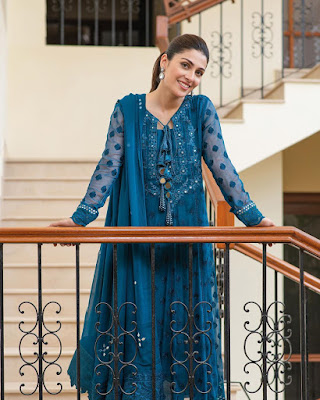
Ayeza Khan Photoshoot 2020, Ayeza Khan Photos, Ayeza Khan 2020 New

Ayeza Khan Hot Photoshoot Ayeza Khan Hot Photoshoot, Ayeza Khan, Ayeza Khan Photos